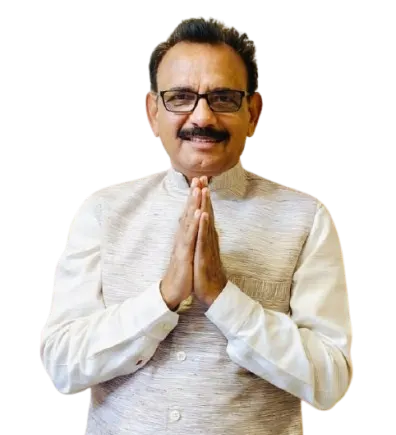
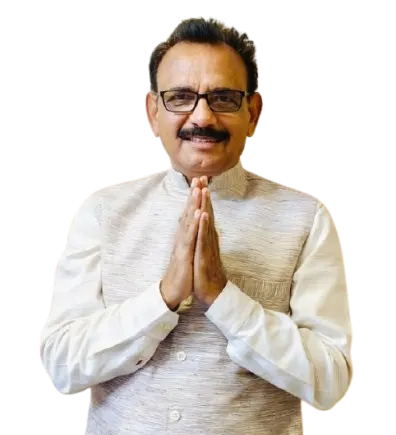
Few words in astrology frighten people the way “Kaalsarp Dosh” does. The phrase, with its imagery of time and the serpent, is used to scare people and often to extract money in the name of elaborate poojas. Dr Santosh Sharma wants to cut through all of that.

He doesn’t accept Kaalsarp Dosh as it’s commonly told, and he’s blunt about why: the old, classical astrology texts don’t mention it at all. The practice of Kaalsarp pooja has only grown over the last four or five hundred years, and much of what surrounds it- premium poojas at famous temples, expensive silver snakes to buy- has no real logic behind it. In his experience, he has never met anyone who genuinely benefited from those rituals. This guide explains what Kaalsarp Dosh means, how it forms, the effects it brings, and the practical remedies he believes in.

The Real Meaning of Kaalsarp Dosh

The term Kaalsarp is made of two words: kaal and sarp. To understand the dosh, you have to understand both.

Kaal means time, our time span. We are born one day, and one day we will die, and the journey between that birth and that death is our kaal, the lifetime we pass through. There’s a beautiful symbolic layer here too: think of Kali standing upon Shiva, Mahakal. These are symbolic images, not literal ones; Kali was never a mad woman standing on her husband. Kali upon Mahakal represents that feminine energy, the Adi Shakti, standing on Mahakal (Shiva), meaning she is beyond time. We live under time, within the span between birth and death, known as kaal. 

Sarp means the serpent, the snake. And how does a snake move? It has no legs; it must crawl, struggling forward. That is the heart of the meaning. If you have Kaalsarp Dosh, your path from birth to death, your life’s journey, tends to move like that snake: full of struggle, zigzagging, with effort required for every single thing. Whatever you want- a job, a promotion, success in business, a peaceful and happy family life- comes only through hard, tireless work, and often still slips away.

How Kaalsarp Dosh Forms in the Chart

Astrologically, two planets cause Kaalsarp Dosh: Rahu and Ketu. Spotting it is simple. Draw a line between Rahu and Ketu in the chart. If all, or the majority, of the planets fall on one side of that line, Kaalsarp Dosh is present.

There are degrees to it. When all the planets sit on one side, it’s a complete (sampoorna) Kaalsarp Dosh. When just one or two stray to the other side, it’s a partial (aanshik) Kaalsarp Dosh, which people describe as 90% or 80% and so on. Dr. Santosh Sharma is careful to note that he uses the term “Kaalsarp” only because you already know and understand the word, not because he accepts the fearful notion attached to it.

The Three Clear Signs of Kaalsarp Dosh

Three symptoms show up clearly in a life affected by Kaalsarp Dosh, and they’re worth recognising honestly.

The first is delay. Whatever you want, whatever you’re working toward, is delayed, and by the time it finally arrives, your attraction to it has often faded. The second is that effort doesn’t match reward: the harder you work, the less the result seems to reflect it. As he puts it, labour input is inversely proportional to output: a great deal of hard work, a disappointing return. The third is that what you truly deserve simply doesn’t come to you. These three together- delay, poor return on effort, and deserved things not arriving- create the deep frustration that marks this condition.

The Difficult Effects of Rahu and Ketu

Because Kaalsarp Dosh is built from Rahu and Ketu, its effects flow from how those two shadow planets behave when troubled.

Rahu can create disruption, restlessness, and even a kind of madness. It can sabotage your plans and, in its intensity, push a person toward reckless acts or accidents. During a difficult Rahu mahadasha, some people even leave home and run away. Rahu can break a marriage, cause divorce, and create obstacles around childbirth. And when it combines badly with other planets, the effects sharpen: Rahu with Saturn (aspecting or sitting together) forms the Pishach or Shrapit Yoga, a cursed phase where problems arise whose cause you can’t even understand. Rahu aspecting the Sun creates an eclipse-like affliction (which some also call Pitra Dosh); with the Moon, it brings a restless, agitated mind; with Mars, it forms Angarak Yoga, flooding a person with so much energy that they grow frenzied, rush everything, and risk their health and even a nervous breakdown; and with Jupiter, it forms Guru Chandal Yoga, bringing dishonour despite one’s knowledge.

Ketu, the other half of the axis, spreads confusion. In the ascendant, it creates anxiety and worry. In the fourth house, it plants a deep, hard-to-name confusion in the heart, so you can’t quite grasp what’s happening in your life. In the seventh house, it brings a dryness to marriage, where love struggles to rise, and suspicion creeps in. And with the Moon, it can pull a person into anxiety and depression. In different positions, Ketu creates different illusions, but confusion is its signature.

The Remedies Dr. Santosh Sharma Recommends

Here’s where his approach differs sharply from the fear-merchants. He prescribes no temple poojas and nothing done on your behalf by someone else, only practices you do yourself.

The core remedy is a specific rudraksha combination: the 8 Mukhi Rudraksha for Ketu and the 9 Mukhi Rudraksha for Rahu, with the 11 Mukhi Rudraksha of Panchmukhi Hanuman added between them. His reasoning is elegant. Since Rahu and Ketu have no physical body, he anchors the combination with Panchmukhi Hanuman, whose five faces symbolise the five elements- earth, water, fire, air, and ether- that make up our physical body. When these five elements fall out of balance, physical and mental troubles arise, so the 11 Mukhi keeps you grounded and stable while the 8 and 9 Mukhi address Ketu and Rahu on either side. In some cases, he adds a Kaalsarp yantra to complete the combination, available in both Indonesian and Nepal bead options.

There’s a second combination: 8+9+10 mukhi for a specific problem. If you sense negative energy around you, suffer disturbing dreams, can’t get sound sleep, and wake in the morning drained and joyless rather than rested, add the 10 Mukhi Rudraksha to the 8 and 9 Mukhi, connected to Lord Krishna and Vishnu, for protection.

One important clarification he insists on: the 8 Mukhi is for Ketu, and the 9 Mukhi is for Rahu, not the other way around, despite what many people say. He has made separate videos busting exactly this myth, so the associations here are deliberate and correct.

The Chakra Practice That Completes the Remedy

Wearing the rudraksha is only half the work. Alongside them, Dr. Santosh Sharma prescribes chakra sadhana: root chakra (Muladhara) practice for Rahu, and crown chakra (Sahasrara) practice for Ketu.

But there’s a deeper logic. The root chakra sits at the base of the spine and the crown at the top of the head, and to truly connect these two, the five chakras between them must also be balanced. So the real aim is sadhana of all seven chakras. When you practise this, your energy comes into balance, and the obstacles Kaalsarp Dosh throws up- the delays, the effort that yields nothing, the deserved things that never arrive- begin to dissolve. This is what genuinely frees a person, not a silver snake bought at an inflated price or rituals done without understanding the real meaning of kalasarpa dosh.

The Takeaway

Kaalsarp Dosh is real as a pattern, a life that moves like a crawling serpent, full of struggle, delay, and effort that outpaces reward, but it is not the terrifying curse that fear-based astrology makes it out to be. It forms when Rahu and Ketu fall to one side of the chart, and you address it not through expensive temple rituals but through practices you do yourself: the 8, 9, and 11 Mukhi rudraksha with a Kaalsarp yantra, and balancing all seven chakras.

Above all, don’t let anyone frighten you into wasteful poojas. As Dr. Santosh Sharma shows, the classical texts don’t even mention this dosh, and the genuine path forward is understanding, the right remedies, and steady spiritual practice, not fear. As always, confirming whether Kaalsarp Dosh is present at all requires a proper reading of your chart.

Frequently Asked Questions

What is Kaalsarp Dosh?

Kaalsarp Dosh forms when all or most planets in a chart fall on one side of the Rahu-Ketu axis. The name means “time-serpent”, symbolising a life journey that moves like a crawling snake, full of struggle, delay, and effort that outpaces reward.

What are the main signs of Kaalsarp Dosh?

Three signs stand out: things you want are delayed (and lose their appeal by the time they arrive), hard work brings disappointing results, and what you deserve doesn’t come to you. Together, these create deep frustration.

Is Kaalsarp Dosh mentioned in the old astrology texts?

No. Dr. Santosh Sharma points out that classical astrology texts contain no mention of Kaalsarp Dosh. The practice of Kaalsarp pooja has grown only over the last four or five hundred years, and he cautions against the fear built around it.

What are the remedies for Kaalsarp Dosh?

He recommends wearing the 8 Mukhi Rudraksha (Ketu), 9 Mukhi Rudraksha (Rahu), and 11 Mukhi Rudraksha (Panchmukhi Hanuman) together, with a Kaalsarp yantra, plus sadhana of all seven chakras, especially the root and crown chakras. He does not recommend temple poojas.

Is the 8 Mukhi for Rahu or Ketu?

The 8 Mukhi Rudraksha is for Ketu, and the 9 Mukhi is for Rahu, not the reverse, despite common confusion. Dr. Santosh Sharma has addressed this myth specifically to clarify the correct associations.

Do I need to do temple poojas to remove Kaalsarp Dosh?

According to Dr. Santosh Sharma, no. He does not recommend poojas performed at temples or by others on your behalf, nor buying expensive silver snakes. He advocates self-practice: the right rudraksha combination and chakra sadhana.