

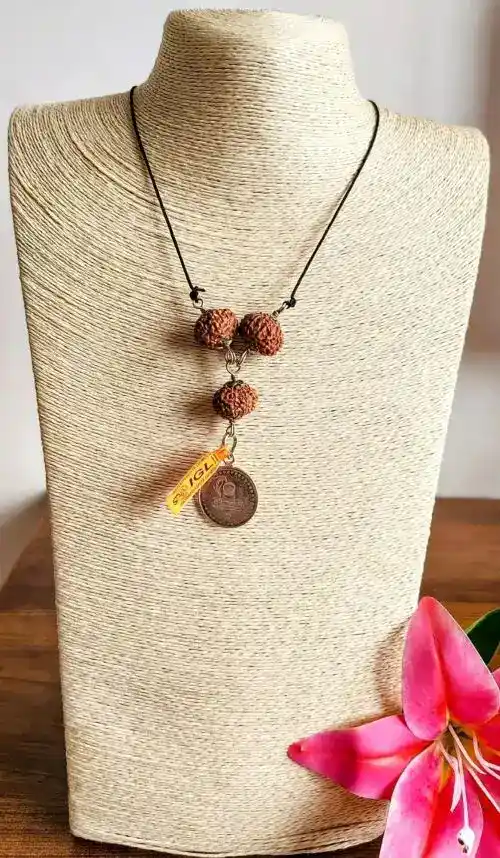
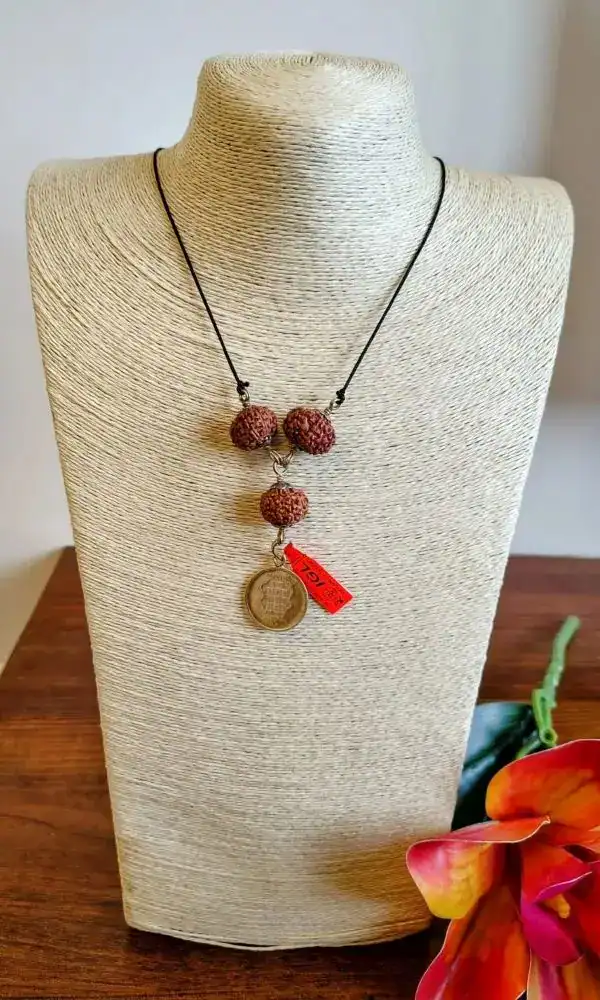
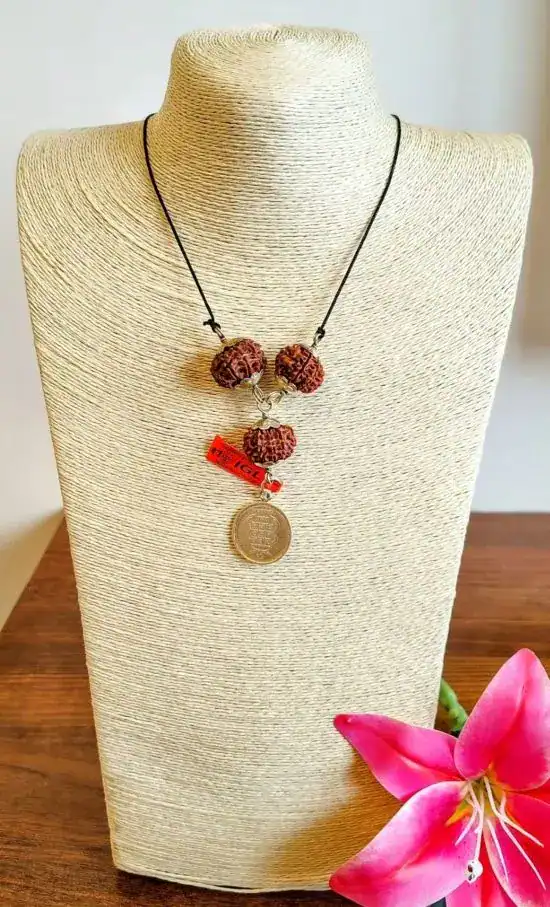
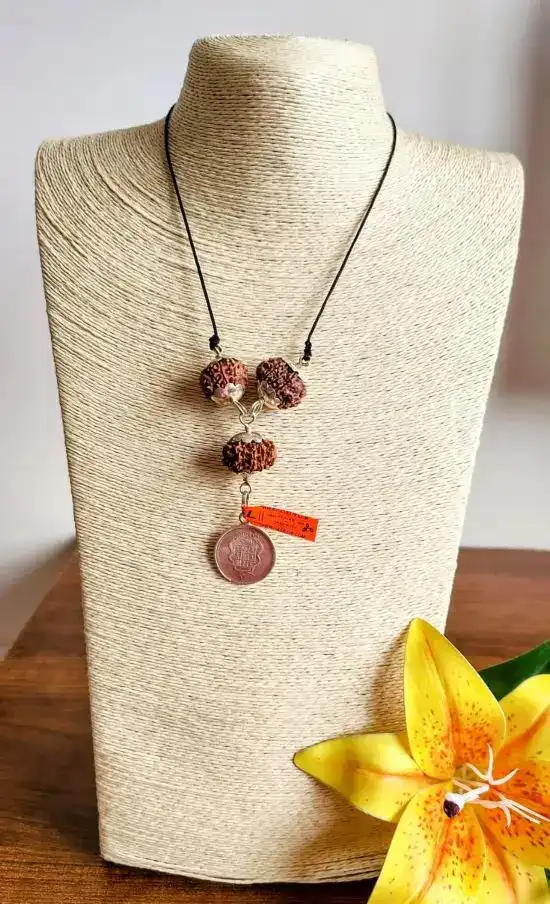
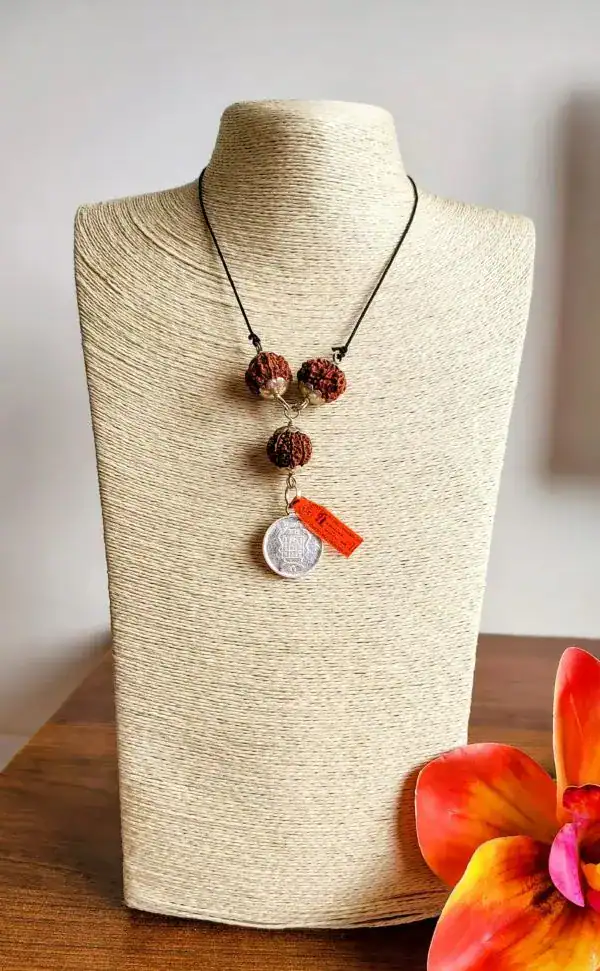
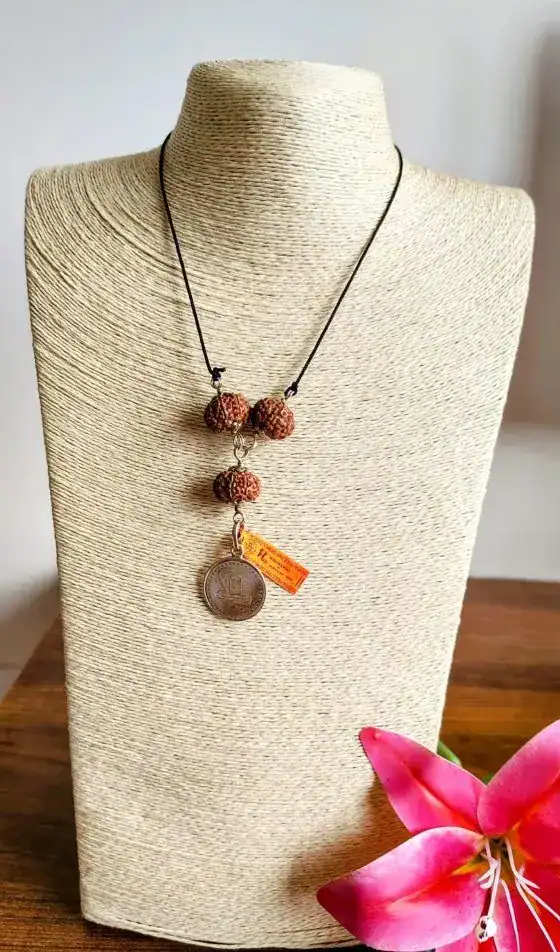
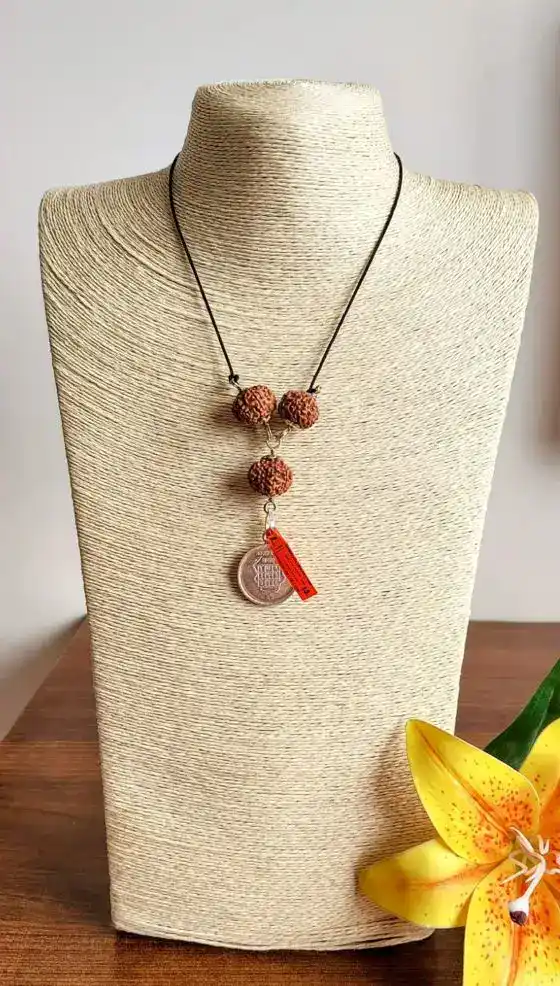
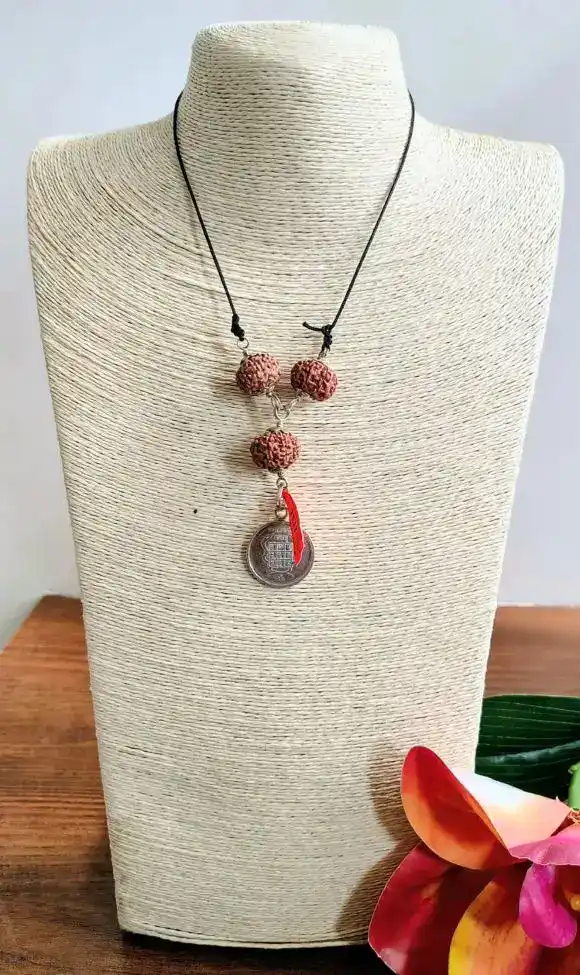
Kala Sarpa Dosh Mala (Narayan) is a focused Rudraksha trio of 8, 9, and 10 Mukhi beads, representing the symbolic energies of Ketu, Rahu, and Lord Vishnu. This powerful combination is traditionally used to support those facing challenges often associated with Kala Sarpa Dosh — such as recurring delays, struggles despite effort, and energy stagnation. The 8 Mukhi (Ketu) and 9 Mukhi (Rahu) address the karmic and energetic pull of the Rahu–Ketu axis, while the 10 Mukhi Rudraksha, linked to Lord Vishnu (Narayan), is revered for its balancing influence against negative energies and disturbed dreams. Especially suitable for chakra-based energy work, this mala helps align the Root and Crown Chakras, symbolizing grounded presence and higher awareness.
₹21,000.00
₹18,000.00
₹44,000.00
₹42,000.00
₹38,000.00
₹21,000.00
₹18,000.00
₹18,000.00
Buy Natural and Certified Kala Sarpa Dosh Rudraksha (Narayan)
Kala Sarpa Dosha is one of the most talked about and most misrepresented planetary conditions in Vedic astrology. The name itself has been weaponised by a section of the astrological community to frighten people and extract money through expensive rituals, yantras, and donations. Dr. Santosh Sharmaa is direct about this: fear-mongering in the name of Kala Sarpa Dosha is a business model, not a remedy.
Understanding what Kala Sarpa Dosha actually is immediately cuts through the fear. Kala means time or lifespan. Sarpa means snake. The snake does not move in a straight line — it crawls in a zigzag pattern. This describes the life experience of someone with this dosha precisely: consistent hard work, genuine effort, real capability — but results that are disproportionately small, delayed, and frustrating. Nothing comes easily. Everything requires more struggle than it should. The potential is there, but it cannot fully express itself. This is Kala Sarpa Dosha.
The remedy is not ritual. It is addressing Rahu and Ketu through the correct Rudraksha combination.
Kala sarpa rudraksha mala (Narayan)
The Narayan Mala contains three specific Rudrakshas, each addressing a distinct dimension of Kala Sarpa Dosha’s effects.
The 8 Mukhi Rudraksha is for Ketu, ruled by Lord Ganesha. A common misconception in the market is that 8 Mukhi is for Rahu and 9 Mukhi is for Ketu. This is completely wrong. The 8 Mukhi addresses Ketu’s anxiety-producing, confusing, and spiritually destabilising effects. 8 mukhi rules over the Crown chakra, at the top of the head.
The 9 Mukhi Rudraksha is for Rahu, ruled by Lord Bhairava, and its affliction creates confusion, disorientation, fear, and the persistent sense of being trapped in circumstances beyond one’s control. Rahu governs the Mooladhara Chakra (root chakra).
The 10 Mukhi Rudraksha is for Lord Vishnu (also Lord Krishna), the divine protector and preserver. It adds a layer of powerful protection from negative energies, bad dreams, and harmful influences from the external environment.
This specific combination — 8+9+10 — is recommended for those experiencing bad dreams and nightmares, sleep disorders and inability to get restorative sleep, waking up drained and anxious, the persistent feeling that someone is sending negative or harmful energy toward them, fear and unexplained anxiety, and a general sense that negative forces are at play in their life.
Chakra Practice for This Mala
The Aura Chakra Sadhana practice that specifically activates the Narayan Mala is dual. For Rahu (9 Mukhi), practise Mooladhara Chakra Sadhana — sit quietly, visualise the colour red at the root chakra at the base of the spine, and hold this visualisation with focused breath. For Ketu (8 Mukhi), practise Sahasrara Chakra Sadhana — visualise white colour at the crown of the head. These two practices together address the full Rahu-Ketu axis that creates Kala Sarpa Dosha. Practise consistently, without gaps, for sustained results. Results deepen within up to 30 days of consistent wearing, combined with regular chakra practice.
Wearing Guidelines
Wear the mala around the neck. Every bead is energised through proper Vedic puja before dispatch. No dietary restrictions apply. Remove before bathing. Store in a wooden or copper box when not worn. Never share the mala.
Care Instructions
Apply olive oil, sandalwood oil, or pure cow ghee occasionally to maintain the beads’ surface. Store in a wooden or copper box when not worn.
Frequently Asked Questions
What is Kala Sarpa Dosha, and should I be afraid of it?
Kala Sarpa Dosha occurs when all or most planets in the birth chart fall on one side of the Rahu-Ketu axis. It creates a pattern of persistent struggle in which hard work consistently yields smaller results than deserved. Dr. Santosh Sharmaa is clear that the fear and panic created around this dosha is manufactured, largely for commercial purposes. Understanding what it actually is — a specific energetic pattern in the chart that can be addressed through proper Rudraksha remedy — removes the fear entirely and replaces it with a practical solution.
Is it true that 8 Mukhi is for Rahu and 9 Mukhi is for Ketu?
No. This is a widespread misconception. The 8 Mukhi Rudraksha is for Ketu, governed by Lord Ganesha. The 9 Mukhi Rudraksha is for Rahu, governed by Lord Bhairava. Getting this right is important because wearing the wrong bead for the wrong planet will not produce the intended result. Dr. Santosh Sharmaa has addressed this misconception in dedicated videos on his channel.
Will an expensive puja or ritual remove Kala Sarpa Dosha?
Dr. Santosh Sharmaa’s position is clear and based on personal observation: donating silver, gold, or copper objects and performing expensive puja ceremonies does not resolve Kala Sarpa Dosha in any meaningful or sustained way. The genuine remedy is to address Rahu and Ketu through the correct Rudraksha combination worn consistently, along with proper Mooladhara and Sahasrara Chakra Sadhana. This is what creates lasting energetic change.
How does the 10 Mukhi help in this combination?
The 10 Mukhi Rudraksha carries Lord Vishnu’s protective energy. It is specifically effective against negative energies, bad dreams, harmful intentions from others, and psychic disturbances. In the context of Kala Sarpa Dosha, where the Rahu-Ketu axis often creates vulnerability to external negative influences alongside internal confusion, the 10 Mukhi adds a powerful protective shield that addresses the external dimension, while the 8 and 9 Mukhi address the internal planetary imbalance.
What chakra practice should I do with this mala?
Practice Mooladhara Chakra Sadhana for Rahu — sit quietly, visualise red colour at the root chakra at the base of the spine, hold with focused breath. Practice Sahasrara Chakra Sadhana for Ketu — visualise violet colour at the crown of the head. These two practices together address the full Rahu-Ketu axis. Do both consistently without gaps for the strongest results.
₹21,000.00
₹18,000.00
₹21,000.00
₹18,000.00
₹18,000.00
Buy Natural and Certified Kala Sarpa Dosh Rudraksha (Narayan)
Kala Sarpa Dosha is one of the most talked about and most misrepresented planetary conditions in Vedic astrology. The name itself has been weaponised by a section of the astrological community to frighten people and extract money through expensive rituals, yantras, and donations. Dr. Santosh Sharmaa is direct about this: fear-mongering in the name of Kala Sarpa Dosha is a business model, not a remedy.
Understanding what Kala Sarpa Dosha actually is immediately cuts through the fear. Kala means time or lifespan. Sarpa means snake. The snake does not move in a straight line — it crawls in a zigzag pattern. This describes the life experience of someone with this dosha precisely: consistent hard work, genuine effort, real capability — but results that are disproportionately small, delayed, and frustrating. Nothing comes easily. Everything requires more struggle than it should. The potential is there, but it cannot fully express itself. This is Kala Sarpa Dosha.
The remedy is not ritual. It is addressing Rahu and Ketu through the correct Rudraksha combination.
Kala sarpa rudraksha mala (Narayan)
The Narayan Mala contains three specific Rudrakshas, each addressing a distinct dimension of Kala Sarpa Dosha’s effects.
The 8 Mukhi Rudraksha is for Ketu, ruled by Lord Ganesha. A common misconception in the market is that 8 Mukhi is for Rahu and 9 Mukhi is for Ketu. This is completely wrong. The 8 Mukhi addresses Ketu’s anxiety-producing, confusing, and spiritually destabilising effects. 8 mukhi rules over the Crown chakra, at the top of the head.
The 9 Mukhi Rudraksha is for Rahu, ruled by Lord Bhairava, and its affliction creates confusion, disorientation, fear, and the persistent sense of being trapped in circumstances beyond one’s control. Rahu governs the Mooladhara Chakra (root chakra).
The 10 Mukhi Rudraksha is for Lord Vishnu (also Lord Krishna), the divine protector and preserver. It adds a layer of powerful protection from negative energies, bad dreams, and harmful influences from the external environment.
This specific combination — 8+9+10 — is recommended for those experiencing bad dreams and nightmares, sleep disorders and inability to get restorative sleep, waking up drained and anxious, the persistent feeling that someone is sending negative or harmful energy toward them, fear and unexplained anxiety, and a general sense that negative forces are at play in their life.
Chakra Practice for This Mala
The Aura Chakra Sadhana practice that specifically activates the Narayan Mala is dual. For Rahu (9 Mukhi), practise Mooladhara Chakra Sadhana — sit quietly, visualise the colour red at the root chakra at the base of the spine, and hold this visualisation with focused breath. For Ketu (8 Mukhi), practise Sahasrara Chakra Sadhana — visualise white colour at the crown of the head. These two practices together address the full Rahu-Ketu axis that creates Kala Sarpa Dosha. Practise consistently, without gaps, for sustained results. Results deepen within up to 30 days of consistent wearing, combined with regular chakra practice.
Wearing Guidelines
Wear the mala around the neck. Every bead is energised through proper Vedic puja before dispatch. No dietary restrictions apply. Remove before bathing. Store in a wooden or copper box when not worn. Never share the mala.
Care Instructions
Apply olive oil, sandalwood oil, or pure cow ghee occasionally to maintain the beads’ surface. Store in a wooden or copper box when not worn.
₹44,000.00
₹42,000.00
₹38,000.00
Buy Natural and Certified Kala Sarpa Dosh Rudraksha (Narayan)
Kala Sarpa Dosha is one of the most talked about and most misrepresented planetary conditions in Vedic astrology. The name itself has been weaponised by a section of the astrological community to frighten people and extract money through expensive rituals, yantras, and donations. Dr. Santosh Sharmaa is direct about this: fear-mongering in the name of Kala Sarpa Dosha is a business model, not a remedy.
Understanding what Kala Sarpa Dosha actually is immediately cuts through the fear. Kala means time or lifespan. Sarpa means snake. The snake does not move in a straight line — it crawls in a zigzag pattern. This describes the life experience of someone with this dosha precisely: consistent hard work, genuine effort, real capability — but results that are disproportionately small, delayed, and frustrating. Nothing comes easily. Everything requires more struggle than it should. The potential is there, but it cannot fully express itself. This is Kala Sarpa Dosha.
The remedy is not ritual. It is addressing Rahu and Ketu through the correct Rudraksha combination.
Kala sarpa rudraksha mala (Narayan)
The Narayan Mala contains three specific Rudrakshas, each addressing a distinct dimension of Kala Sarpa Dosha’s effects.
The 8 Mukhi Rudraksha is for Ketu, ruled by Lord Ganesha. A common misconception in the market is that 8 Mukhi is for Rahu and 9 Mukhi is for Ketu. This is completely wrong. The 8 Mukhi addresses Ketu’s anxiety-producing, confusing, and spiritually destabilising effects. 8 mukhi rules over the Crown chakra, at the top of the head.
The 9 Mukhi Rudraksha is for Rahu, ruled by Lord Bhairava, and its affliction creates confusion, disorientation, fear, and the persistent sense of being trapped in circumstances beyond one’s control. Rahu governs the Mooladhara Chakra (root chakra).
The 10 Mukhi Rudraksha is for Lord Vishnu (also Lord Krishna), the divine protector and preserver. It adds a layer of powerful protection from negative energies, bad dreams, and harmful influences from the external environment.
This specific combination — 8+9+10 — is recommended for those experiencing bad dreams and nightmares, sleep disorders and inability to get restorative sleep, waking up drained and anxious, the persistent feeling that someone is sending negative or harmful energy toward them, fear and unexplained anxiety, and a general sense that negative forces are at play in their life.
Chakra Practice for This Mala
The Aura Chakra Sadhana practice that specifically activates the Narayan Mala is dual. For Rahu (9 Mukhi), practise Mooladhara Chakra Sadhana — sit quietly, visualise the colour red at the root chakra at the base of the spine, and hold this visualisation with focused breath. For Ketu (8 Mukhi), practise Sahasrara Chakra Sadhana — visualise white colour at the crown of the head. These two practices together address the full Rahu-Ketu axis that creates Kala Sarpa Dosha. Practise consistently, without gaps, for sustained results. Results deepen within up to 30 days of consistent wearing, combined with regular chakra practice.
Wearing Guidelines
Wear the mala around the neck. Every bead is energised through proper Vedic puja before dispatch. No dietary restrictions apply. Remove before bathing. Store in a wooden or copper box when not worn. Never share the mala.
Care Instructions
Apply olive oil, sandalwood oil, or pure cow ghee occasionally to maintain the beads’ surface. Store in a wooden or copper box when not worn.